DiamNEX: Breaking the Boundaries of Diamond Applications, Flexible Diamond Membranes Empower Cooling Technology Innovation
Recently, relevant media have conducted a special report on the flexible diamond cooling technology and industrialization progress of DiamNEX Ltd. (hereinafter referred to as "DiamNEX"). As a Hong Kong-based startup focusing on the innovative application of diamond materials, DiamNEX is breaking the inherent application limitations of diamonds through patented technologies, promoting the commercialization of flexible diamond membranes in the cooling field, and providing a new solution for the thermal management challenges of high-end equipment.
As a Hong Kong-based startup focusing on the innovative application of diamond materials, DiamNEX is breaking the inherent application limitations of diamonds through patented technologies, promoting the commercialization of flexible diamond membranes in the cooling field, and providing a new solution for the thermal management challenges of high-end equipment.
DiamNEX's core breakthrough is a patented growth process that can cultivate diamonds into micron-thick membranes. This wafer-level ultra-thin diamond membrane not only possesses the excellent thermal conductivity and optical properties inherent to diamonds, but also breaks the traditional perception that diamonds are "brittle and difficult to shape", achieving bendable and crack-resistant characteristics. It has successfully solved the core pain points that have long restricted the wide application of diamonds in manufacturing—brittleness and cost control.
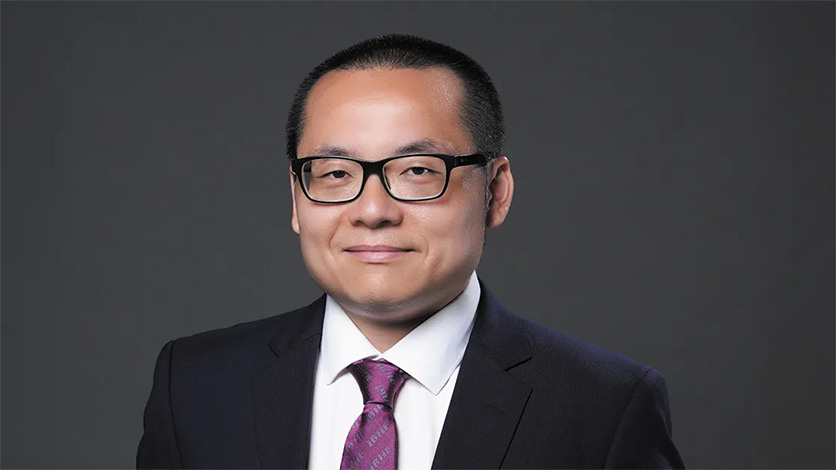
"Once diamond is thin enough, it is no longer brittle in the way people traditionally think of it," said Dr. Zhiqin Chu, founder and chief scientist of DiamNEX, who also serves as director of the HKU Diamond Laboratory. Founded last year, the company's core goal is to transform the technological achievements in the laboratory into products with industrial stability. Instead of changing the inherent use of diamonds, it changes their physical form, enabling diamonds to adapt to scenarios where traditional rigid diamonds cannot be applied.
Currently, DiamNEX is building a small production line in Shenzhen, China, mainly used to provide samples for potential partners and facilitate technical verification and cooperation docking between both parties. "At this stage, consistency matters more than scale," Dr. Zhiqin Chu emphasized in an interview. The company plans to collect customer feedback by the middle of the year to fully evaluate the feasibility of large-scale implementation of its technologies and products.
In terms of market layout, DiamNEX has identified heat spreaders in the fields of electric vehicles, power electronics, and communication equipment as its primary target market—in such scenarios, equipment overheating often severely limits performance, and the excellent thermal conductivity of flexible diamond membranes is expected to achieve efficient thermal management. Optical windows and specialized coatings are secondary development directions, while diamond-based semiconductors have been included in long-term strategic planning, with gradual advancement of technological research and development and market exploration.
Currently, energy costs remain a constraint for the company's development. Since the chemical vapor deposition method used for diamond cultivation is an energy-intensive process, it also affects the layout and location decisions for future production scale expansion. In response to this, DiamNEX is focusing its core efforts on technology and product verification at this stage: the primary task is to prove that flexible diamond membranes can achieve stable mass production and be successfully integrated into practical application systems. After customers verify their application value in real scenarios, the company will gradually promote the next development plans such as large-scale production, technology licensing, or co-construction with partners.